

An Ancient Advent
A Green Wreath, Herbs for the Hours, and a Short History


Roots that Nourish
To understand Advent—or any tradition really—I always like to start with a “how did we get here in the first place?” The roots of something are important; they make ways and give shape to the thing that’s growing.
Shallow roots give lots bursts of life, they take in water for fast growth, but wilt as soon as there’s no rain. Deep roots gather nutrients and strength. But what we are after is a being that has both shallow and deep bearings. We need both kinds of rooting: the shallow roots that draw from what is near at hand—family rhythms, seasons, daily prayers, community—and the deep roots that anchor us in Scripture, history, discipline, and the long and rich witness of God’s people.
If you were not raised in a liturgical tradition—say Orthodoxy, Anglicanism, Catholicism—as I was not, you may find yourself desiring a deeper touchpoint with not only the history of the faith but the ancient roots given to God’s chosen people. Thats the beauty of formation — we are formed from those of all walks and witnesses through the ages, the testimonies and stories. The tomes written in the dark, lives given and whispers of miracles - the mystical ways the Spirit moves in your life and mine — and those gone before.
Pastor Rich Villodas says:
I became a Christian in a Pentecostal church. Since then, I’ve been introduced to the riches of the Eastern Orthodox, Catholic, Reformed, Anabaptist & Anglican traditions, and more.
I’ve been formed by the witness of the Church throughout time & space.
There’s something to be gained in the waiting. Hard to hear and bear—when most of what we want or need is available at our fingertips. But the heart of Advent has always asked: what do we do when we are hoping, waiting? Which is all of us in one way or another. It’s not another thing to do, because Advent is not to be consumed — it’s a gentle invitation to forgo and rest, words are typically not associated with this season.
Regardless of the histories, Advent arrives as simply as ever, just like He who came for His beloved—the hearts and souls of mankind: me, you. In this, and for the matter of simplicity: a short history, a green wreath, and an easy course of hours to set your time by this season.
I have five children all under seven years of age. There is a pressure to give the family this bright and shining Christmas, and to teach them the meaning behind this time of year. The mercy of this season is that Advent will teach these things all on its own—but only if it takes root in my own heart first. For the Spirit moves in fire and flame, in earthquake and on mountain peaks, but more often in the still and quiet in-between places.
At the end, I hope a burden is lifted and inspiration renewed. There can be an advent for the children and one for you in the small hours of the mornings of evenings, a minute or two during the day. Tend first the Keeper of the Hearth, you — the house will warm and the fire will grow through the years.
The Hours of Advent
Rest. Becoming unhurried. Going without (fast a meal, dessert, etc). Rest — a time to sleep deeply and well. Nourishing meals, herbs and honey. These could be the beginnings of an advent that is nourishing for the body, and soul:
At First Light: Light the week’s candle upon your waking, while it’s dark and no one is stirring. Read a Psalm.
Midday - Pause for 15 mins, pray, make yourself a cuppa, then do your work.
After Bedtime: Moment of stillness—tea, a corner chair, prayers whispered into the quiet night. Light the same candle again after the house settles for good. This is a Liturgy from the New Zealand Book of Prayer that I thought was fitting for advent —
Lord,
it is night.
The night is for stillness.
Let us be still in the presence of God.
It is night after a long day.
What has been done has been done; what has not been done has not been done; let it be.
The night is dark.
Let our fears of the darkness of the world and of our own lives
rest in you.
The night is quiet.
Let the quietness of your peace enfold us, all dear to us,
and all who have no peace.
The night heralds the dawn.
Let us look expectantly to a new day, new joys, new possibilities.
In your name we pray.
Amen.
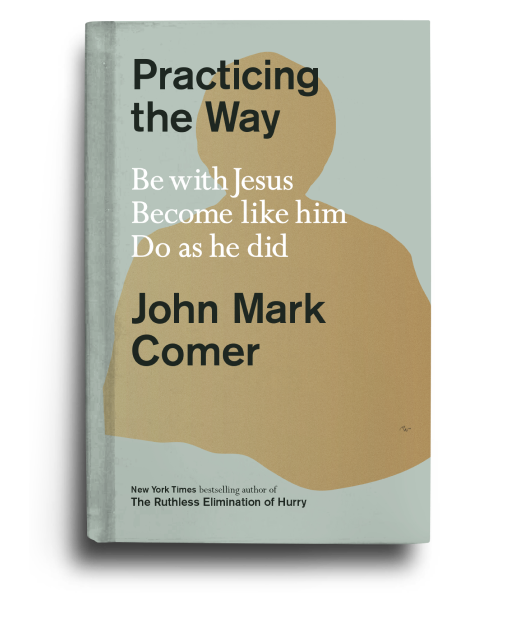
I received a small book from John Mark Comer and I tracked an electronic version = down online for you. It’s a good a simple read, and what I am modeling my “Hours of Advent” from. I go to this little book often and I wanted to provide it for you!1
Pair it with his in depth study on Practicing the Way
A Green Wreath
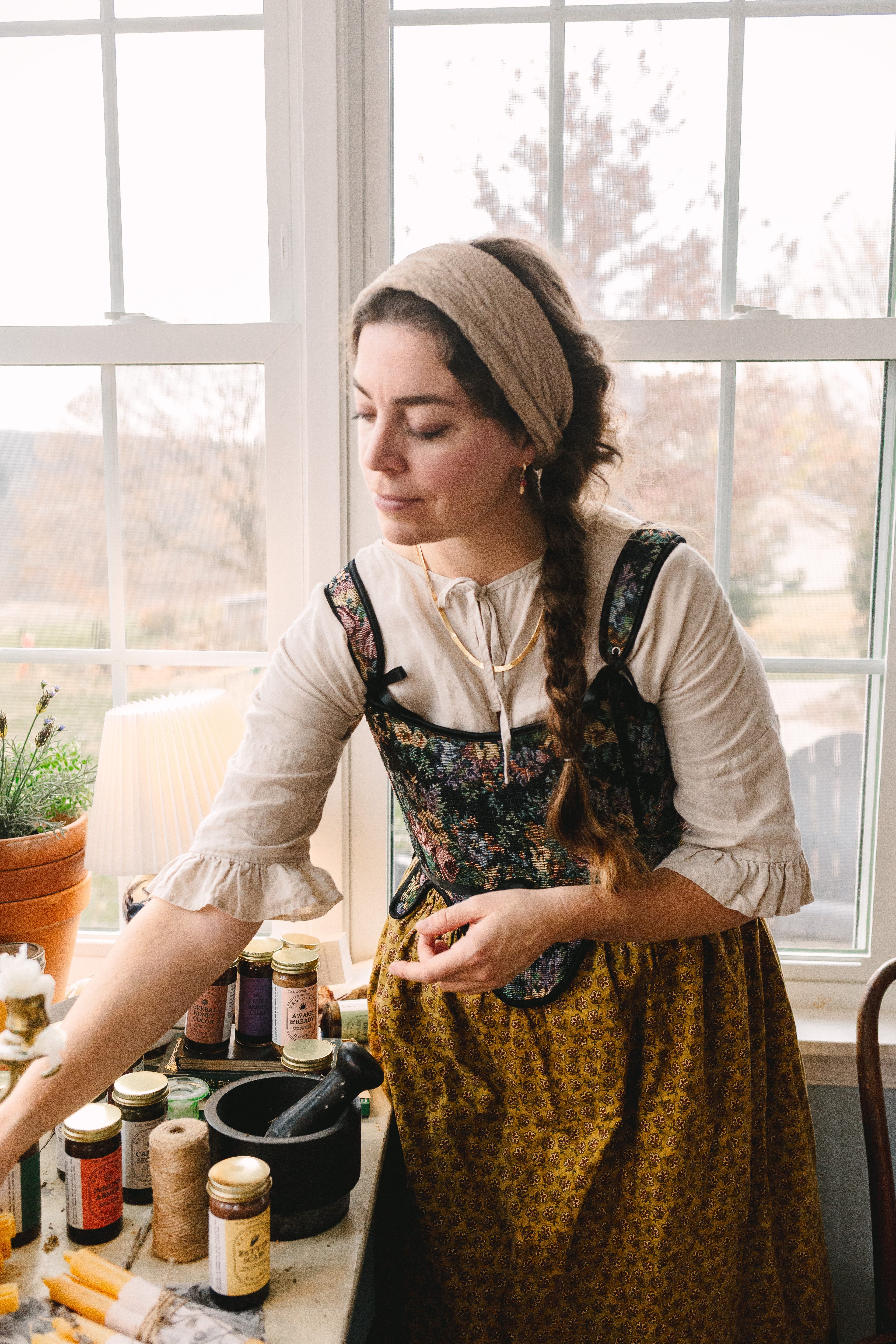
I’ve tried numerous ways of making an Advent wreath over the years, and this time I thought I’d come up with a novel idea (I didn’t) — an Advent wreath in a bowl. Something small enough that little hands can’t dismantle it quite as easily, and pragmatic enough that I don’t have to drag all the Christmas decorations down from the attic. Anything done with a family in tow requires a fair amount of preplanning, and that always leaves the perfect amount of room for the spontaneous beauty of the season, I’ve found.
This bowl took very little: a large bowl (I thrifted a glass one for $4.99 at Goodwill), four mismatched taper holders gathered from around the house, and beeswax candles. I’ve never loved the bright pink and purple candles, so I keep small ribbons tied at the bottom instead. Basically: a bowl, four random candleholders, candles, some greenery.
Here’s exactly how I put mine together — no fuss, no perfection, just the materials I had on hand and what I could gather around the house.
1. Choose a bowl
Any large, shallow bowl works.
Glass, ceramic, wood — thrifted or found.
You want something wide enough to hold four small candle holders without crowding.
2. Gather four candle holders
They do not need to match.
Mine certainly don’t.
Small brass or wooden tapers work well, but anything steady will do.
Place them inside the bowl like a loose circle.
3. Add your candles
I use beeswax tapers because they look warm and natural, and they burn clean.
I’ve never loved the bright pink and purple candles, so I tie small ribbon markers at the bottom of each candle instead — simple, unobtrusive, and symbolic without taking over the look.
4. Fill the bowl with greenery
Take whatever you have in the forest out back, on a hike, trimmings off the tree:
fir
pine
cedar
rosemary
ivy
bay
eucalyptus
dried orange slices
clove-studded citrus
or anything dried from the garden
Nestle the greens around the candle holders to secure them — you want it to feel like a winter woodland, not a styled display.


5. Create your weekly rhythm
We do our advent lightings on Sunday which is also our day of Sabbath rest. Light the appropriate candle each Sunday of Advent. Let the others remain unlit until their week arrives.
In the evenings, you can light the week’s candle again when the house grows quiet, or when you need a small moment of calm in the short winter light.
6. Keep it flexible for family life
The beauty of the bowl is that it’s low, steady, and easy to move.
If tiny fingers investigate, nothing is harmed.
If you need to carry it from room to room, you can.
If it gets messy — it’s greenery in a bowl. It’s meant to be lived with, not preserved.

Herbs for the Hours
For the Still Room, Advent has always felt like a season made of shadows and small lights — the kind of weeks where you listen more than you speak, a bit of overload and exhaustion — and you notice your thin edges where the day meets the early dark. It our frailty it can be a time of gentleness and strengthening, of tending the inward life while the world outside grows cold.
Herbs have always belonged to seasons like this. They warm us, steady us, help us breathe, and keep company with the long nights. Here are the electuaries I find myself reaching for in Advent — small, rooted remedies for a season of watching and waiting.
Find these Electuaries at thelocalwild.com - and FREE SHIPPING! For my U.S. Substack readers with code SUBSTACKFREESHIP
Calm & Secure — for quiet evenings and winter hush
Advent invites a slower heart. Calm & Secure is the blend I reach for on nights when the house finally settles, and I need some extra help settling.
Includes:
Raw Honey, Skullcap, Chamomile, Lemon Balm, Holy Basil, Passionflower, Lavender
Why Advent:
Supports rest after overstimulation (holiday noise, full schedules)
Eases the edges of winter tension
Perfect for evening prayer, reading, or candlelit quiet
Elderberry Chai — for warmth, gathering, and winter hospitality
Advent is the season of keeping warm things close — spices, stories, family gathered in. Elderberry Chai carries all the warmth of a winter kitchen.
Includes:
Honey, Elderberry, Rosehips, Cinnamon, Ginger, Cardamom, Clove
Why Advent:
Warming digestive spices for heavy holiday foods
Supports immune strength during crowded, travel-filled weeks
Tastes like all the the cozy, old yuletide carols you read about in storybooks
Awake & Ready — for dark mornings and early winter light
Awake & Ready fits the mornings when you need steadiness without caffeine jitters.
Includes:
Honey, Roasted Dandelion Root, Chicory, Burdock Root, Cordyceps, Ashwagandha, Cinnamon
Why Advent:
Sustains energy through long, full winter days
Perfect for early-morning quiet before little feet are running
Warm, grounding, and earthy — like a winter hearth
Use for morning prayer, reading, or “first light” candle moments.
Cold & Clear — for breath, winter walks, and staying well
Advent is a season of cold air and breath-clouds, starlit evenings, and ancient hymns sung in drafty spaces. Cold & Clear is the blend that keeps the passages open so you can breathe the season in deeply.
Includes:
Raw Honey, Elderberry, Thyme, Sage, Mint, Hyssop, Yarrow
Why Advent:
Helps cool winter congestion and aids the body’s fever response
Historically grounded herbs for colds and flus
A practical winter companion
The Briefest of Histories
If roots matter—and they do—then Advent deserves a brief, honest look into how it began and how the Church found her way into this winter rhythm of watching and waiting. Like the deep roots of understanding, I pray that these glimpses into the past serve you well. Further readings for your own research2
Danielle Hitchen in her book Sacred Seasons says:
The Origins of the season of Advent are a bit murky. AS the rhythms of the Liturgical year were developed over several centuries, the season of Advent looked a functioned differently in various times and places.”
That right there should release you of any pressure to do this “right or wrong.” Advent has always been a changing reflection of hope in the waiting—fasting and penitence, mirth and anticipation, baptisms, faithfulness, community.
Advent Before It Was Advent (4th–5th Century)
The earliest form of this season wasn’t centered on Christmas at all. In 4th-century Spain and Gaul, Christians kept a six-week winter fast leading up to Epiphany (January 6). The season was defined by repentance, preparation for baptisms, and watching through the darkest weeks of the year.
AD 380 — The Winter Vigil in Saragossa
The Council of Saragossa instructed Christians to attend church daily from December 17–January 6. It wasn’t yet called “Advent,” but the shape was forming: a season set apart in the darkest stretch of the year, marked by gathering and watching through the nights.
AD 480 — Bishop Perpetuus of Tours and “St. Martin’s Lent”
One of the early forerunners of Advent emerged in Gaul, not Rome. Around AD 480, Bishop Perpetuus of Tours ordered Christians to fast three days each week from St. Martin’s Day (November 11) until Christmas. This six-week winter fast became known as St. Martin’s Lent and is widely seen as a major step toward the later Advent season.
Gregory of Tours records:
“From the feast of St. Martin until the Nativity of the Lord, the faithful should fast three days each week.”
6th Century Rome — Turning Toward Bethlehem
By the late 500s, the Church in Rome began to shape winter prayer toward the Nativity of Christ. The Gelasian Sacramentary includes the earliest Advent prayers—voices longing for Christ’s coming in humility and glory.
8th–9th Century — Advent Becomes Four Weeks
Through the Gregorian Sacramentary (A Carolingian-era compilation of Roman prayers, shaped by the influence of Pope Gregory I.), Advent became a four-week season, holding two themes: Christ coming in Bethlehem, Christ coming again at the end of all things. This structure spread throughout Western Europe and became the Advent we recognize today.
10th–15th Century — Medieval Advent (“Mini-Lent”)
During the medieval centuries, Advent settled into its most familiar historical shape. It was widely kept as a small Lent before Christmas—a season of restraint, quiet, and watching. Fasting practices differed from place to place, but the general tone across Europe was sober. The long winter nights gave the season its imagery: waiting in darkness, hoping for dawn, longing for Christ’s coming.
Monastic communities observed the season with early-morning vigils and extended prayer in the dark hours. And in these centuries the O Antiphons (sung December 17–23) rose to prominence, giving Advent its climactic final week of longing.
This medieval form of Advent shaped Christian imagination for nearly five hundred years. It became the backbone of how later traditions—Anglican, Lutheran, and much of the Western Church after the Reformation—understood the season and its movement from darkness toward the coming Light.
The colors of advent: Purple has been the primary color of Advent since the early medieval Church, purple, the color of penitence, preparation, and royalty. Rose appeared a little later. By the 11th–12th centuries, the Church marked the third Sunday of Advent with a brief lifting of the somber mood. The opening word of the mass that day was Gaudete — “Rejoice.” A lighter purple eventually became a rose color.
Early Modern Era — Advent Softens but Remains
After the Middle Ages, Advent did not disappear. It grew gentler. The Reformation retained the season—especially among Lutherans and Anglicans—even as the strict fasts softened. Yet the four-week structure, Scripture readings, and watchful tone remained recognizable.
17th–18th Century
As monastic influence faded, Advent devotion moved more deeply into the home. Evening prayer, candlelight, and simple family practices formed the heart of the season. German-speaking households observed simple winter devotions—candlelight during evening prayers and evergreens brought indoors. While not yet an Advent ritual, these practices shaped the domestic backdrop in which the Advent wreath later emerged.
19th Century — The Advent Wreath Appears
In 1839, Johann Hinrich Wichern, a Lutheran pastor in Hamburg, created a large wooden wheel with candles to help the children in his care count the days to Christmas. The idea spread quickly, eventually becoming the modern Advent wreath adopted across Western Christianity.
20th–21st Century
As Advent became more widely observed, Advent is often risked being overshadowed by Christmas or just another part of Christmas. Hopefully, this is a time of waiting, peace, and preparation.
Further Reading
Sacred Seasons — Danielle Hitchen
A gentle, beautifully written introduction to the Christian year that blends theological grounding with practical guidance for families. Hitchen’s work is especially helpful for those recovering ancient rhythms in modern homes.
Best for: Finding approachable ways to engage with the Liturgical year
The Origins of the Liturgical Year — Thomas J. Talley
The foundational academic study on how Advent, Epiphany, Lent, and the entire liturgical cycle emerged in the early Church. Talley traces Advent from its earliest winter fasts to its medieval form with exacting historical detail.
Best for: Readers who want the deep historical roots behind this series.
=
Hearthstone Fables (Substack)
Kristin’s writing brings the liturgical year to life with depth, warmth, and historical grounding. Her Advent reflections and seasonal guides pair well with this piece, offering both devotional insight and a rooted, accessible theology of time.
Best for: Resources for your own Still Book and learning the rhythms of the Liturgical year
I have already been dreading the Advent wreath (much as I love it) because of our kitty’s shenanigans. Now I have a solution - an Advent bowl! So happy for this idea.
This was such a lovely essay Taylor! I was able to watch you make your Advent wreath on IG so I had a visual while I was reading. This season feels so peaceful, dark, withdrawn and fits perfectly with the preparation and waiting before the Nativity of our Lord.