

Liminal Lammastide
The Æcerbot, Hlāfmæsse, and the Coming of Autumnus

I utter the familiar prayer for a kingdom to come, and in the next breath I ask for daily bread. In breathing, I am a mix ordinary and extraordinary, something of natural and super natural, of of this earth and also of another.
The beginning goes:
Our Father, who art in heaven,
Hallowed be thy name.
Thy kingdom come, thy will be done, on earth as it is in heaven.
Give us this day our daily bread.1
Lammas
Lammas is a small mystery within a series of harvest tidings long ago in Anglo-Saxon England. Lammas, or hlāfmæsse in Old English, is straightforward enough: it comes from hlāf (”loaf” or “bread”) and mæsse (”Mass” or “festival”). 2 It was a time when the first loaf of bread was consecrated and set apart as the firstfruits of the harvest. The season of autumnus was understood to begin around August 7. There are no formally recorded Lammas liturgical blessings, though there are a few recorded prayers for God’s protection over the harvest as it came in.3
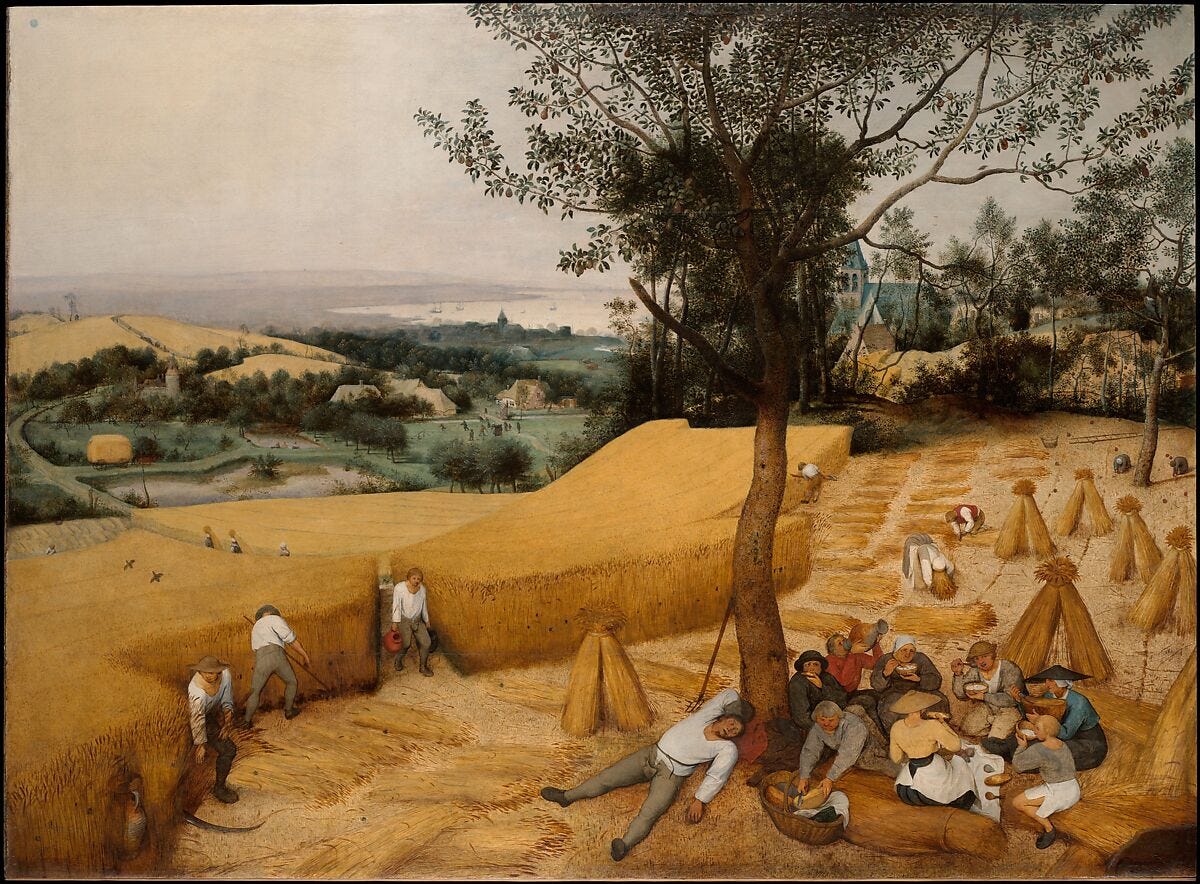
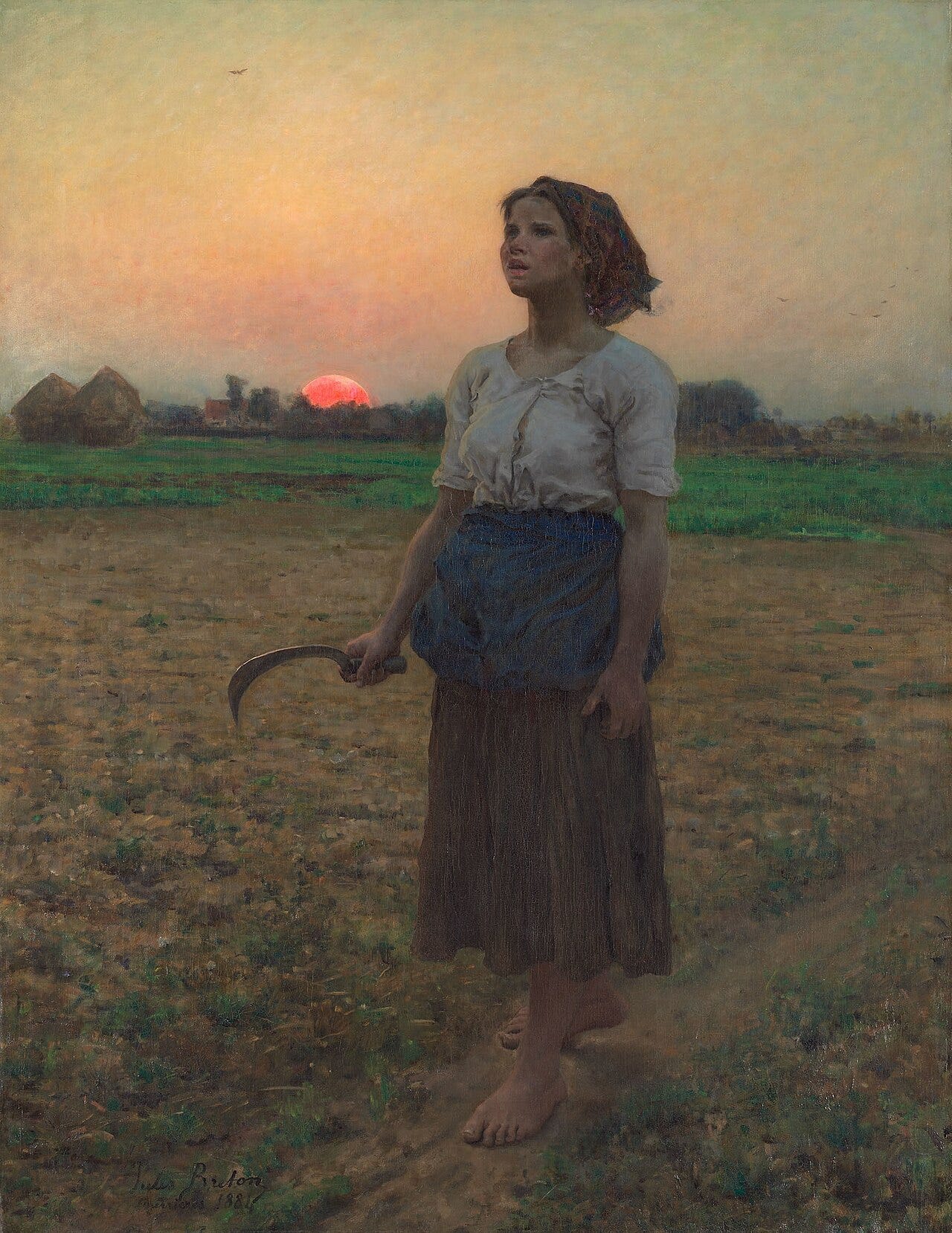
The harvest was the lifeblood of an agrarian community. It was a source of great joy or great anxiety, and an entire community would feel it — and work for it. A concept we today can only know in theory.
‘Daily bread,’ I imagine, would have evoked a visceral reaction: perhaps the horrible memory of empty bellies, or a sigh of relief. Daily bread was backbreaking labor, laughter while spreading seed, a communal tending of the earth, knowing your neighbor, and shared success or failure. It was threshing and grinding, persevering and storing, so that weevils, mice, vermin, and beetles wouldn’t spoil the harvest.
There was a man who once called himself the Lord of the Harvest:
And Jesus went throughout all the cities and villages, teaching in their synagogues and proclaiming the gospel of the kingdom and healing every disease and every affliction. When he saw the crowds, he had compassion for them, because they were harassed and helpless, like sheep without a shepherd. Then he said to his disciples, “The harvest is plentiful, but the laborers are few; therefore pray earnestly to the Lord of the harvest to send out laborers into his harvest.”
Matthew 9:35-38
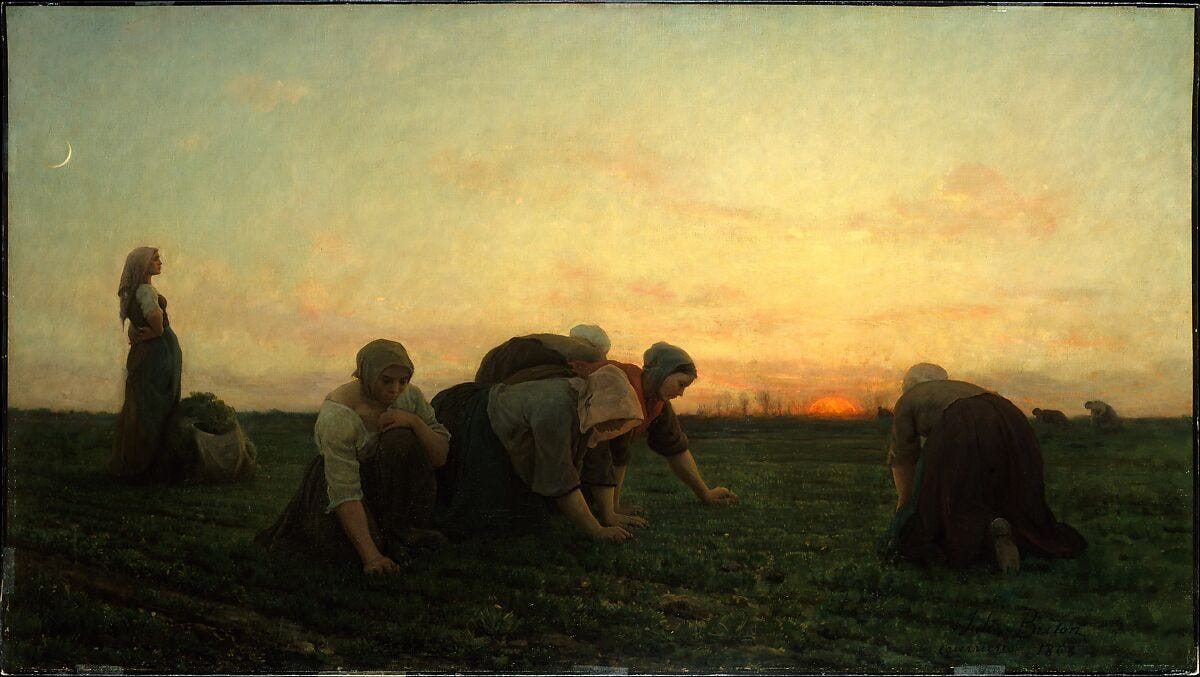
For the harvest there must be workers. Someone works the soil, making it soft and ready, spreads the seed, pulls weeds, chases rooks and sparrows, prays for rain, prays for the winds to cease; those with strong backs take down and bind, arms crush and grind, hands sift and knead, bake and slice.
The Lord of the Harvest continually drew the work of the field into the language of His Kingdom. The ordinary work of the earth became an extraordinary picture of kingdom coming.
I myself, and you too are also a work of the Holy Spirit, another story The Lord of the Harvest also told:
“Now the parable is this: The seed is the word of God...”
Some hear the Word, but it is quickly stolen away. Others receive it with joy, yet have no roots and fall away when trials come. Still others are choked by the cares, riches, and pleasures of life, and bear no mature fruit.4
“...As for that in the good soil, they are those who, hearing the word, hold it fast in an honest and good heart, and bear fruit with patience.”
We too have fruits that grow and come ready for harvest and offering.
Firstfruits
Celebrating the firstfruits of the harvest feels lovely and good when there are full heads of grain, favorable weather, and a full granary for the winter.
But what does the Lord of the Harvest say when hail destroys the crop, locusts come, mice and rats spoil the stores, sickness spreads, or there are too few workers to bring the harvest in?
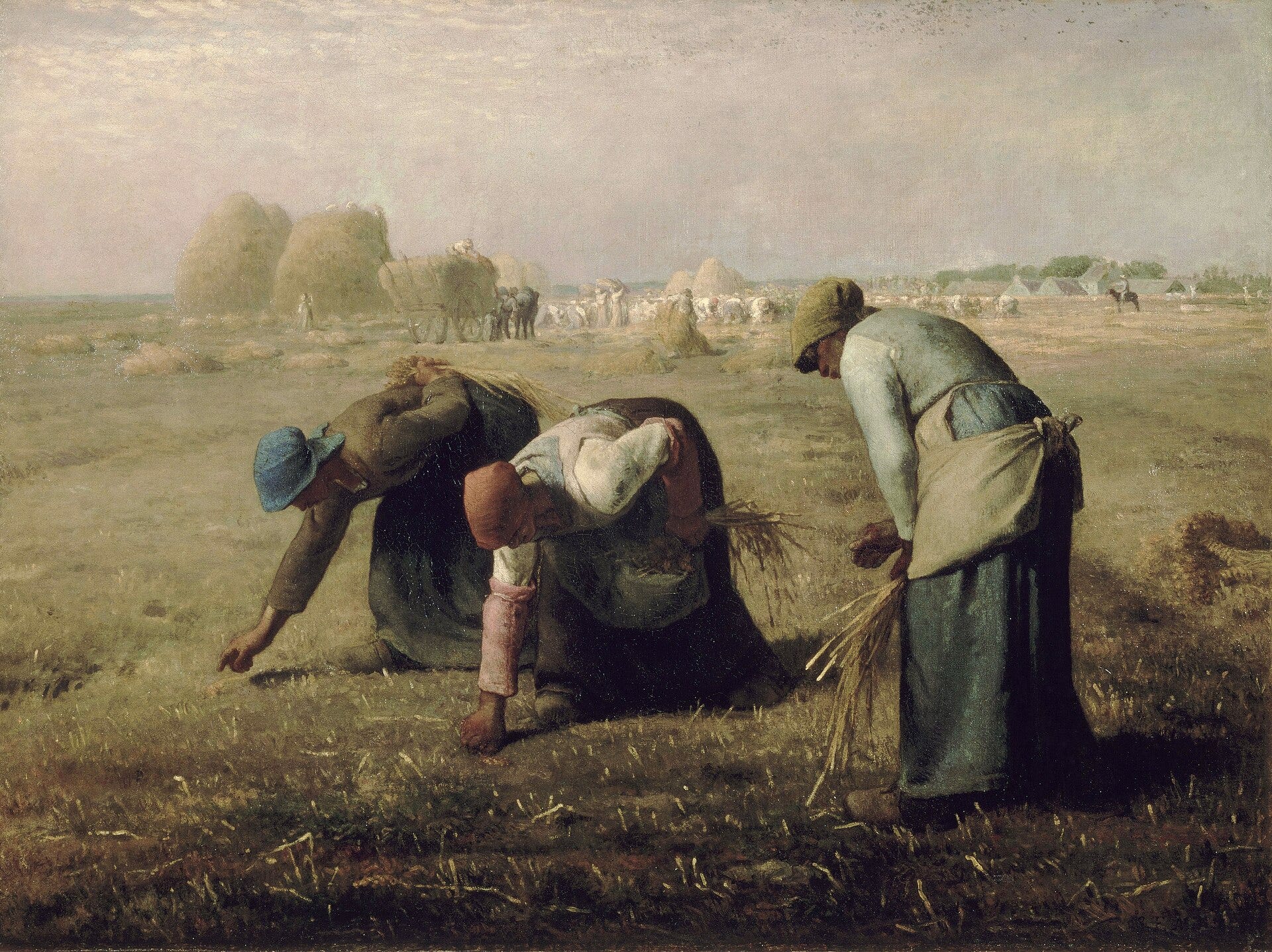
I’ve wrestled with this question in a myriad of ways for years. It’s the age-old question: Why do bad things happen? What if the good things I hoped for do not happen? We all ask these questions in different and painful forms.
Again, I am taken to that ordinary prayer. Before my daily bread, before the harvest, before chasing the birds and weeding, even before working the soil and planting, the prayer bids me first ask for the Lord of the Harvest’s Kingdom to come and His will to be done.
In saying those words, I acknowledge two realities that I am caught up in while I walk this earth. The first is that the Kingdom is coming, and in saying so I admit that it is not yet fully here. I ask for His will to be done, but in the asking I know this world still longs for the fullness of that day.
In faith and trust we ask for our daily bread—but what of hunger?
In the midst of the middle place, this in-between we walk, the Lord of the Harvest Himself came and walked among the people He loved. He provided food for the hungry and tended to the sick and injured. It was another picture of the already and the not yet. In His earthly body, He gave us a foretaste of His Kingdom to come. In the end, He did not spare Himself. He gave it all. The Lord of the Harvest gave Himself, His body broken for us, and rose again.
Lammas was never the whole harvest. The first loaf was lifted in hope because there was more still standing in the field. A beginning, not a completion. So too, Christ became “the firstfruits of those who have fallen asleep.”5 The first sheaf gathered in. The promise that the harvest had truly begun. Until that day, the fields are still full even as we lift our first loaf in celebration. There is still harvest to come. The Lord of the Harvest still calls laborers into His fields.
Good harvests or bad harvests, there is always work to be done. And though it is difficult, we know there will be a day when we will feast at a table, never wanting, but that time is not yet.
There is a mystery there. Like Lammas. Hope and blessing. Curse and distress. Brokenness and restoration. Feast and famine.
“Thorns and thistles it shall bring forth for you;
and you shall eat the plants of the field.
By the sweat of your face
you shall eat bread...”6
Humankind has always had to hold these together. Seed in good soil. Fear of winter. Thorns and thistles. Hard ground. A harvest with workers intent on bringing in the bounty. The blessing of bread.
The Kingdom will come. May the Lord of the Harvest find us in His fields, working, hearing the Word with an honest and good heart, and bearing good fruit.
For now, we will bake a special loaf, slather it with butter, and gather with those we love. We will pray and remember harvests before us and answered prayers. We will remember those who have labored alongside us in bringing forth the Kingdom. For the harvest is not over.
Lammas was only the beginning of the harvesttide; it marked the start of a long and arduous season of gathering in. There is more celebration to come.
ONE DAY WE WILL SAY
Our Father, holy is Your name.
Your Kingdom is here.
Your will is being done.
Just as You said.
The Æcerbot
Someone of a mysterious and debated text, The Æcerbot (Field Remedy) — one of the oldest surviving English agricultural blessings appears, an Anglo-Saxon ritual preserved in a manuscript from the late tenth or early eleventh century. After baking a small loaf from every kind of flour and placing it beneath the first furrow, the farmer prayed:
Field full of food for mankind,
bright-blooming, you are blessed
in the holy name of the One who shaped heaven
and the earth on which we live;
the God who made the ground, grant us the gift of growing,
that every grain
might come to use.7
It is interesting to me that it is called “Field Remedy,” and that The farmer prays not for a good or successful harvest, but that every grain come to use. Of this and the parables I will leave you with mysteries to ponder.
This prayer was ended with:
Say then thrice Crescite in nomine patris, sit benedicti [Grow in the name of the father, be blessed]. Amen and Pater noster three times.8
Living into Lammas
The beauty of quarter days is August 1 comes and goes, the invitation does not. Harvesttide is still unfolding!
Bake a loaf of bread. Or a few in smaller loaves for neighbors.
Put it on the table and let the family heave off chucks, or slice orderly.
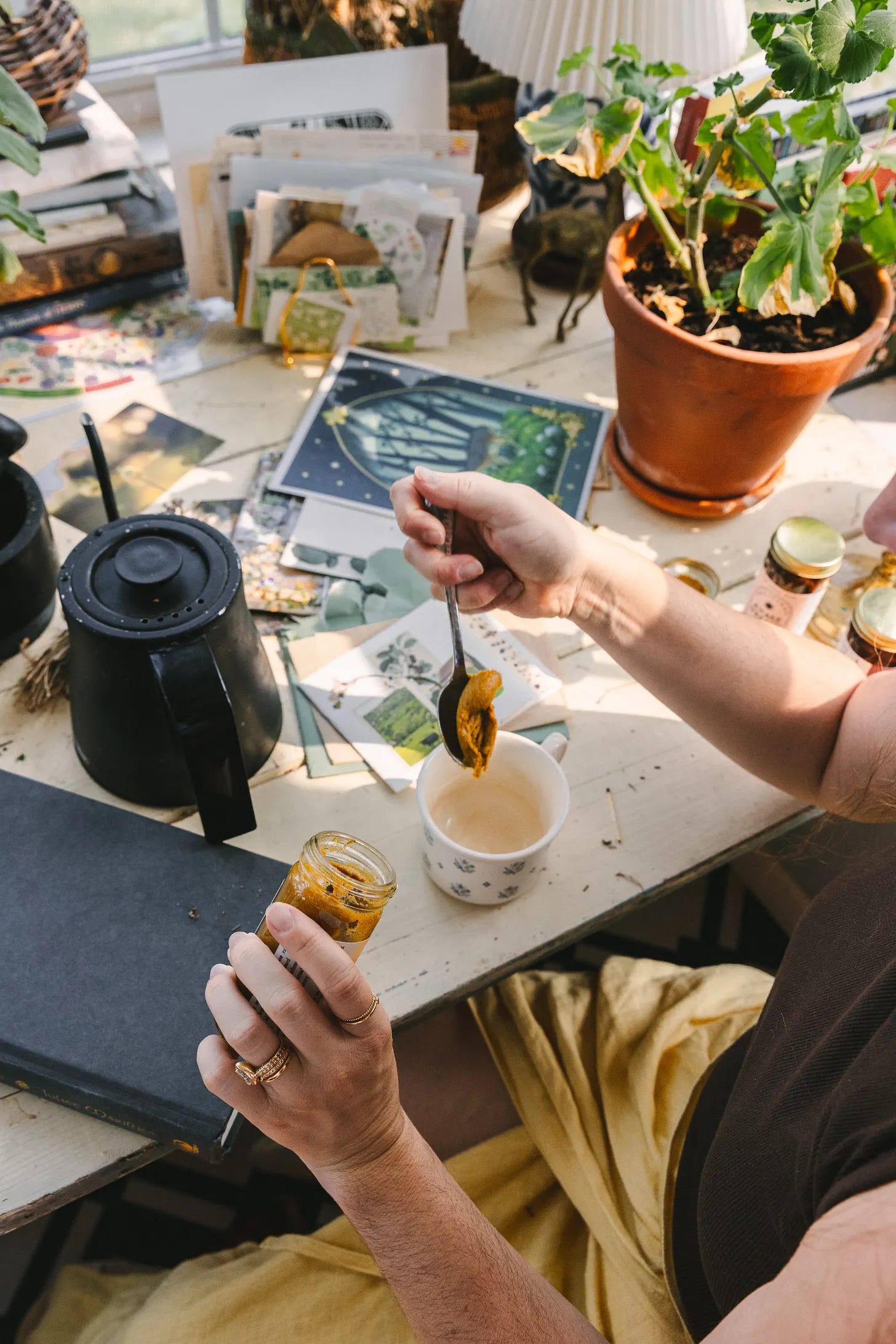
Make a small feast — oils and spices for dipping, chocolate sauce, jams, cheeses! Spread it thick with yellow butter. Some honey, (maybe electuary?!)
Gather with your family or invite a neighbor to the table this season.’
Take time this Autumnus in older times August 7- Novemeber 6 to read Christ’s harvest parables:
The Parable of the Sower — Matthew 13:1–23, Mark 4:1–20, Luke 8:4–15
The Wheat and the Weeds — Matthew 13:24–30, 36–43
The Workers in the Vineyard — Matthew 20:1–16
The Lord of the Harvest — Matthew 9:35–38
The Growing Seed — Mark 4:26–29
The Barren Fig Tree — Luke 13:6–9
The True Vine — John 15:1–17
Offer thanks for the work—seen and unseen.
Notice how often the ordinary work of the earth became the language of kingdom and kigdom coming.
Ask God in conversation — What has borne fruit this year? What still needs tending?
Above all, remember that Christ is the firstfruit. The harvest has begun, but it is not yet complete. There is still work to do. There is still joy and pain. There is still bread to break. There is still a greater feast to come.
Electuaries for the Beginning of Harvest
Harvest is hot and sweaty work and so is August — here are some of my blends that are wonderful to nourish within this season.
Golden Creamsicle
A bright, golden blend for the warmth of late summer.
Turmeric – Traditionally used to support a healthy inflammatory response.
Marshmallow Root – A soothing herb that supports the body’s tissues and digestive system.
Tulsi – Traditionally enjoyed to help the body adapt to everyday stress and promote a sense of calm.
Orange Peel – Gently supports digestion while adding a bright citrus flavor.
Raw Honey – Brings the herbs together in a nourishing, time-honored preparation.
Battle Scars
A blend to support recovery after long days and hard work.
Hibiscus – A refreshing herb traditionally used to support heart health and healthy circulation.
Rose – A gentle herb known for its calming and uplifting qualities.
Schisandra Berry – Traditionally used to support energy, endurance, and overall resilience.
Lemon Balm – Helps promote relaxation and supports a healthy nervous system.
Calendula – Traditionally used to support the body’s natural healing processes.
Celtic Sea Salt – Helps replenish minerals after time spent working or sweating.
Raw Honey – Brings the herbs together in a nourishing, time-honored preparation
How to Enjoy

Savor 1 teaspoon daily, or stir into a mug of warm tea, milk, or water. Keep temperatures below boiling to protect the beneficial properties of the raw honey.
VISIT THE LOCAL WILD HONEY SHOP
The Lord’s Prayer (Pater Noster), Matthew 6:9–13:
Our Father in heaven, hallowed be your name. Your kingdom come, your will be done, on earth as it is in heaven. Give us this day our daily bread, and forgive us our debts, as we also have forgiven our debtors. And lead us not into temptation, but deliver us from evil.
Eleanor Parker, Winters in the World: A Journey through the Anglo-Saxon Year (London: Reaktion Books, 2022), 193.
Parker, Winters in the World, 194.
Paraphrase mine - the full parable Luke 8:12-15
1 Corinthians 15:20
Genesis 3:18
Karen Louise Jolly, trans., "Æcerbot [Field Remedy] Ritual," from MS Cotton Caligula A. VII, fols. 176a–178a, in Popular Religion in Late Saxon England: Elf Charms in Context (Chapel Hill: University of North Carolina Press, 1996), 6–8, revised May 17, 2018, https://www2.hawaii.edu/~kjolly/field.htm.
Jolly, "Æcerbot."
Thank you Taylor. ❤️ A beautiful devotional. I am blessed by the reading of it and my heart is full of hope for the day the gathering of the sheaves is fulfilled. Thy Kingdom Come! Maranatha! 🙏
Lammas has connections with the Feast of Transfiguration, which happens on August 6. We celebrate Christ’s transfiguration and the revelation of His glory on Mt Tabor to the apostles. It is the practice of most Orthodox to bring the ‘first fruits’ of their gardens to be blessed by the Priest at Liturgy that day as Christ is the first fruit and has been revealed, and traditionally, most will make sure to tuck in some grapes in their basket. It has an even more ancient connection to the Festival of Booths or Sukkot, because the scriptures make clear that the Transfiguration happened during that festival practice- and Sukkot also celebrates the harvest, and abundance after their forty years sojurn in the desert. 💕